Cats are experts at hiding when they feel bad. By the time you notice, a cat can already be quite sick. This guide pulls together what four vet sources say, in plain words, so you can spot changes sooner. It is general information, not veterinary advice. If you are worried, call your vet.
Start with the emergencies
Text version of this figure
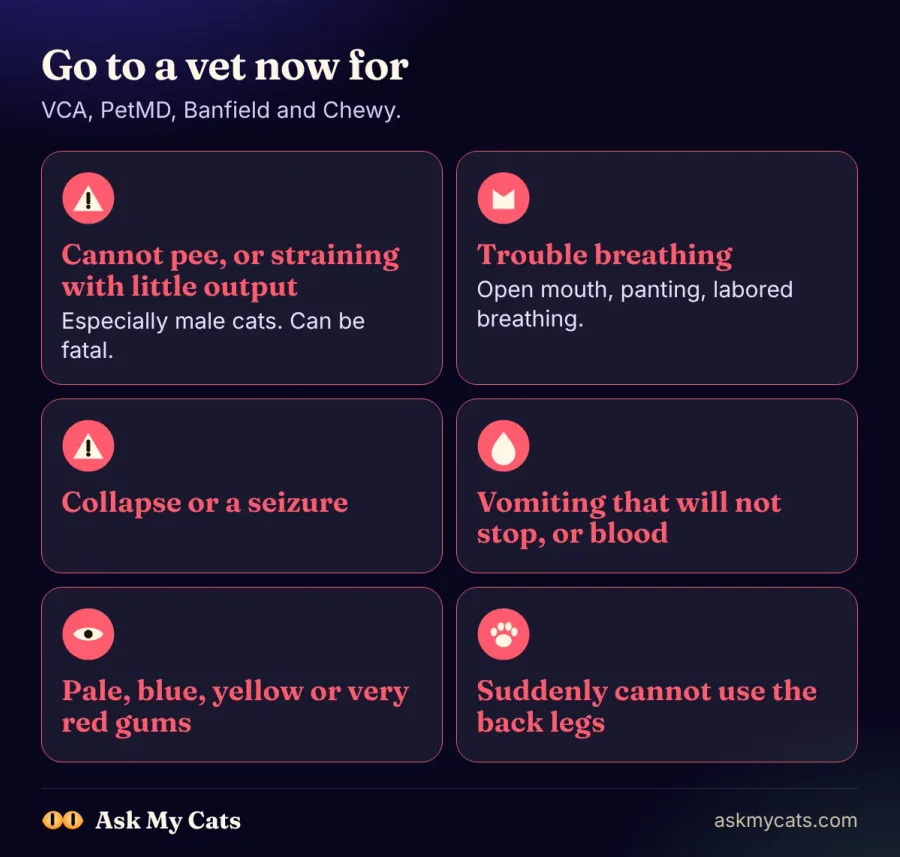
Go to a vet now for: cannot pee or straining with little output, especially in male cats; trouble breathing such as open mouth, panting or labored breathing; collapse or a seizure; vomiting that will not stop or with blood; pale, blue, yellow or very red gums; and suddenly being unable to use the back legs.
PetMD says to get vet care immediately if a cat is suddenly unable to pee, especially a male, because a blocked urethra is an emergency. VCA calls little or no urination a life-threatening emergency, and lists straining in the box and any breathing problem as emergencies. PetMD says unlike dogs, cats do not normally pant. Banfield lists seizures, collapse, repeated vomiting or vomiting blood, a sudden inability to walk or use the back legs, and a suspected poison. VCA lists pale, yellow or bluish gums, skin or eyes. If you are not sure, call a vet or an emergency clinic.
How urgent is it?
Do not do this
Emergency. Go now.
PetMD, VCA and Chewy all say that not being able to urinate can be fatal. Do not wait.
Do not do this
Emergency. Go now.
VCA lists any breathing problem as an emergency. PetMD says cats do not normally pant.
Do not do this
Call your vet today.
VCA says if a cat has not eaten properly for 24 hours, seek immediate veterinary care. Cats that stop eating can develop a serious liver problem.
Unproven
Call your vet and describe it.
Banfield says a cat that hides most of the day or avoids family is more concerning than normal napping. PetMD says call about any mood change.
Unproven
Book a vet visit.
PetMD lists diabetes, kidney disease and an overactive thyroid. Chewy says if you refill the water bowl more often, make an appointment.
Unproven
Book a vet visit.
VCA says chronic illness can cause slow weight loss you can feel along the ribs and spine. Banfield calls unexplained weight loss always concerning.
Why cats hide it
VCA says cats evolved to hide illness because predators target sick animals. Banfield says the hiding instinct is still very much there. We found no figure for how sick a cat can get before owners notice, but VCA says it can be quite sick.
Behavior changes
Text version of this figure
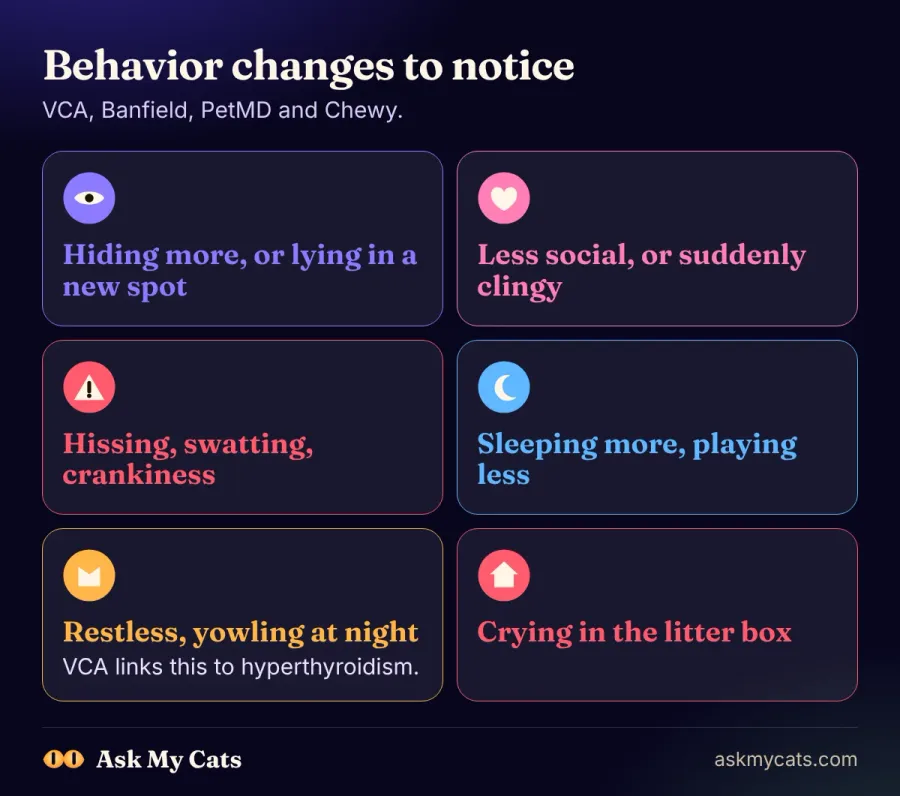
Behavior changes to notice: hiding more or lying in a new spot; being less social or suddenly clingy; hissing, swatting or crankiness; sleeping more and playing less; restlessness and yowling at night, which VCA links to hyperthyroidism; and crying in the litter box.
Banfield says an affectionate cat may become withdrawn or quick to hiss, and an independent cat may become clingy or vocal. Chewy says lying in a new place, such as the closet floor instead of the recliner, may signal illness. PetMD lists sudden crankiness as a sign that can come from pain, vision or hearing changes, an overactive thyroid, or high blood pressure. Banfield says the key is whether it differs from your cat’s usual routine, and that a normal cat still responds to food or attention.
Eating, drinking and weight
Text version of this figure
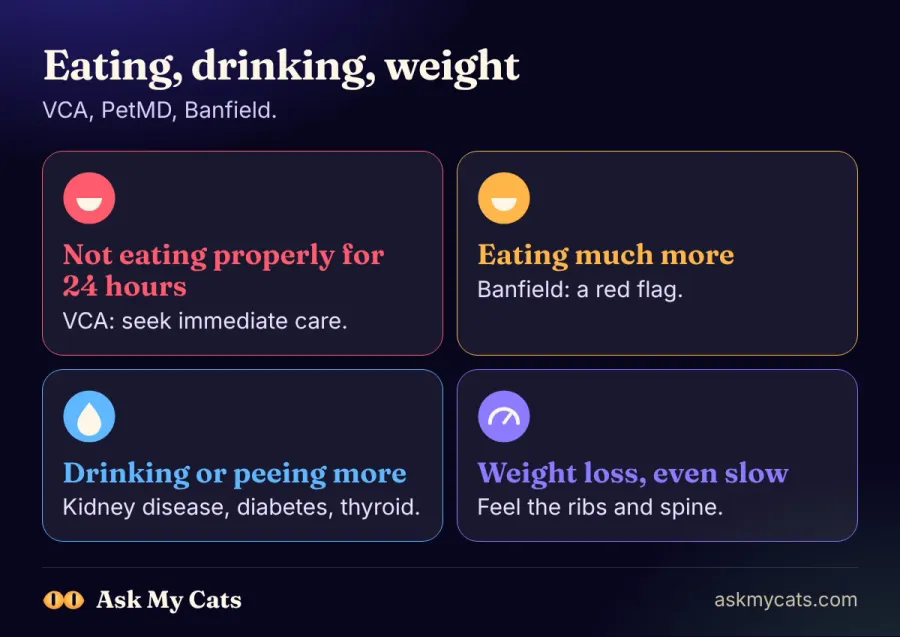
Eating, drinking and weight changes: not eating properly for 24 hours, where VCA says to seek immediate care; eating much more, which Banfield calls a red flag; drinking or peeing more, which can be kidney disease, diabetes or thyroid; and weight loss even if slow, which you can feel on the ribs and spine.
VCA says sick cats may eat and drink more or less. Dental disease can make a cat seem picky, and Banfield says a cat that will not eat but still drinks may have nausea or dental pain. PetMD lists causes of eating more, such as intestinal parasites, an overactive thyroid and diabetes. VCA says to feel the ribs and spine for slow weight loss. VCA also says that sudden weight loss in a cat that was overweight often points to diabetes or an overactive thyroid.
Litter box and mouth
VCA says small, hard, dry stools are never normal, and can be an early sign of kidney disease. It says diarrhea is easy to spot, but constipation is harder to see. Banfield says crying in the box, or going outside it, is a concern. PetMD says a cat may avoid the box if it hurts to use, such as with arthritis. For constipation in particular, see our guide on a cat that pees but will not poop.
PetMD says bad breath is usually dental disease, but can also mean kidney disease or diabetes. Banfield lists drooling, bleeding gums, pawing at the mouth, dropping food and chewing on one side as signs of dental pain. VCA says drooling, bad breath and nasal discharge are not normal in a healthy cat.
Quick body checks
Text version of this figure
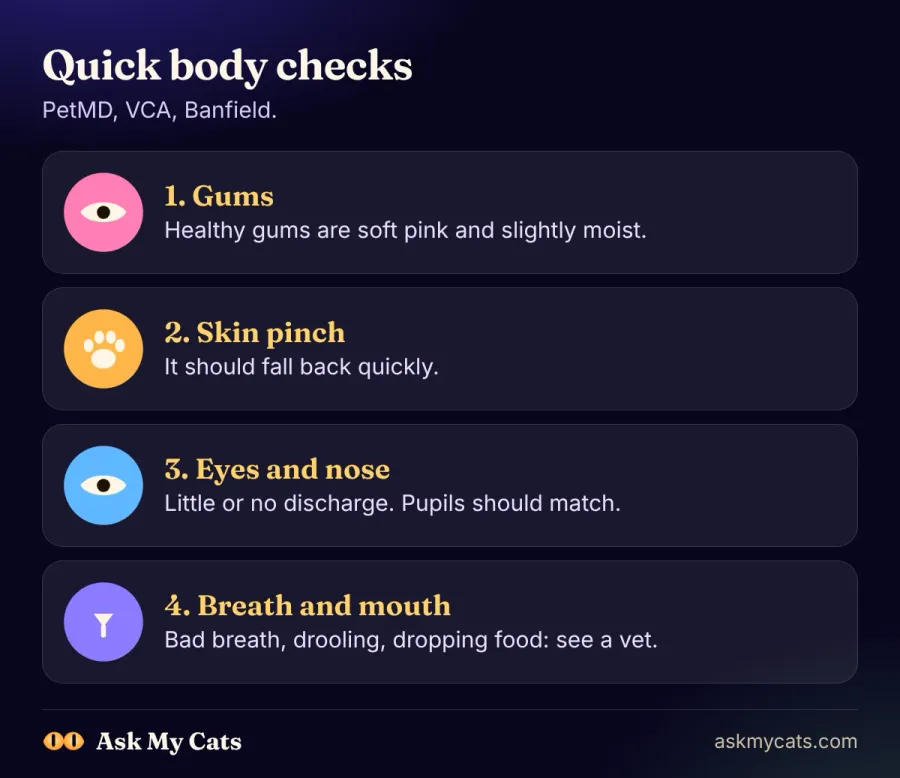
Four quick body checks: gums, which should be soft pink and slightly moist; a skin pinch, which should fall back quickly; eyes and nose, with little or no discharge and matching pupils; and breath and mouth, where bad breath, drooling or dropping food means see a vet.
Banfield says healthy gums are soft pink and slightly moist, and that blue, very pale or bright red gums can mean oxygen or circulation trouble. PetMD says to check that the skin falls back quickly after a pinch, and that the eyes are not sunken. VCA lists squinting, colored eye discharge, a raised third eyelid and uneven pupils as things not to delay. Banfield says a dry nose alone is not a reliable sign of illness. We found no source that gives a normal resting breathing rate, so we do not give one. Ask your vet.
A quick weekly look
Text version of this figure
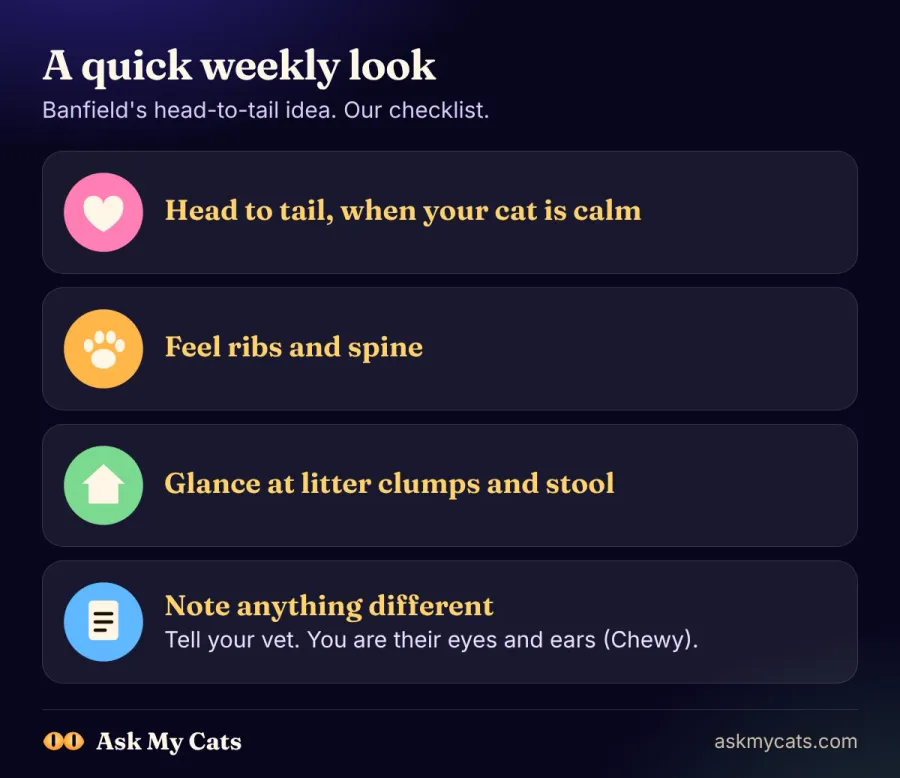
A quick weekly look: head to tail when your cat is calm, feel the ribs and spine, glance at litter clumps and stool, and note anything different to tell your vet.
Banfield suggests a regular head-to-tail look in quiet moments, and says noticing what is different from normal is enough. VCA recommends twice-yearly wellness exams for the average adult cat.
My weekly cat check
Tap each one you did this week.
Related guides
- Signs Your Cat Is Sick
- Blind Cats: Signs, Causes, and How to Help Your Cat Feel Safe
- Cat’s Purr Sounds Congested?
- Home Remedies for Cat Nasal Congestion
- Cat Runny Nose: Safe Home Care, What to Skip
Quick answers
How do I know if my cat is in pain or sick?
Look for changes from normal: hiding, eating or drinking differently, litter box changes, less grooming, or breathing changes. Cats hide it, so any change matters.
How long can a cat go without eating?
VCA says if a cat has not eaten properly for 24 hours, seek immediate veterinary care.
Is a dry nose a sign of illness?
Banfield says a dry nose alone is not a reliable sign.
How often should my cat see the vet?
VCA recommends twice-yearly wellness exams for the average adult cat. Ask your vet what fits yours.